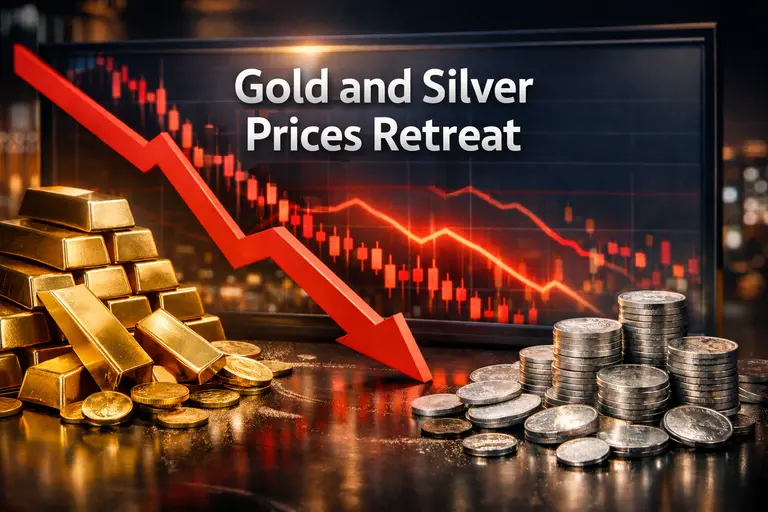
Gold Trading Strategy in 2026 is gaining renewed attention as gold enters the year with strong bullish momentum after hitting record highs in late 2025. Driven by inflation pressure, geopolitical uncertainty, and historic central bank demand, gold remains one of the world’s most influential and actively traded assets.
This guide provides a complete, practical overview of how to trade gold in 2026—covering price behavior, strategies, indicators, timing, risks, and the fundamental forces shaping this market.

What Is Gold Trading?
Gold trading is the practice of buying and selling gold to profit from price movements—whether prices rise or fall. Traders can participate through multiple instruments, including:
- Spot gold (XAUUSD)
- Gold futures
- Gold ETFs
- CFDs
- Physical gold
Gold isn’t just a commodity. It behaves as:
- A financial asset tied to global economic conditions
- A safe haven during inflation, currency weakness, or political instability
In 2025, gold surged above $3,700 per ounce, driven by:
- Record central bank purchases
- Rising ETF demand
- Persistent inflation
- Global uncertainty
Understanding these forces is essential for navigating gold markets in 2026.
For a broader perspective and deeper understanding, it is essential to review the complete guide to gold trading, which covers the fundamentals, market structure, and risk-aware approaches to trading gold in the UAE.
How Gold Prices Move
Gold prices are shaped by several key factors:
1. Inflation and Interest Rates
Gold tends to rise during periods of high inflation or expectations of interest rate cuts.
2. U.S. Dollar Strength
Gold and the U.S. dollar move inversely.
A weaker dollar increases international demand for gold.
3. Central Bank Demand
Record central bank buying has tightened supply and strengthened long-term price support.
4. Geopolitical and Economic Events
Crises, elections, conflict, or financial stress often lead investors toward gold.
5. ETF Investment Flows
Large inflows into gold ETFs typically signal strong long-term bullish momentum.
6. Market Liquidity
The most active trading periods are:
- London
- New York
- London–New York overlap (the strongest window)
Gold behaves more cleanly and predictably during these sessions.
Types of Gold Trading

1. Spot Gold (XAU/USD)
Real-time gold pricing with high liquidity and suitable for short-term traders.
2. Gold Futures (COMEX)
High leverage and institutional volume; best for advanced traders.
3. Gold ETFs
Long-term exposure without storage requirements.
4. Physical Gold (Bars & Coins)
True ownership and long-term security.
Investors in the UAE often rely on reputable providers such as Delor Gold Trading for certified bars and coins.
5. Gold CFDs
Low capital requirement and flexible trading, but higher risk due to leverage.
6. Gold Mining Stocks
Tend to amplify gold’s movements but come with company-specific risks.
Best Gold Trading Strategies for 2026
1. Trend-Following Using the 50-Day MA
Trade only in the direction of the dominant trend:
- Price above 50 MA → buy
- Price below 50 MA → avoid longs
2. RSI Pullback Strategy
Ideal for timing entries during uptrends:
- RSI dips into 35–40
- Enter when RSI rebounds upward
3. Breakout Strategy
Focus on breakouts confirmed by volume, especially during the London–NY overlap.
4. Range Trading
Effective during sideways markets—buy support, sell resistance.
5. Swing Trading
Use Fibonacci retracements (38.2%, 50%, 61.8%) to capture multi-day movements.
6. Hedging Strategy
Gold remains a powerful hedge against inflation and recession.
7. ATR-Based Position Sizing
ATR helps adjust stop-loss distance and position size according to volatility—crucial for gold’s fast moves.
Technical Indicators for Gold Trading
The most reliable indicators include:
- 50 MA / 200 MA – trend direction
- RSI – momentum and pullback timing
- MACD – trend strength and reversal signals
- Fibonacci Retracement – ideal entry zones
- ATR – volatility and stop-loss sizing
- Volume (from futures/ETFs) – breakout confirmation

Best Indicator Combination
The strongest combination for gold trading is:
50 MA + RSI (35–40 pullbacks) + ATR stop-loss
This framework suits both beginners and advanced traders.
Fundamental Analysis for Gold
Gold is influenced by:
- Inflation trends
- Federal Reserve policy
- Dollar strength
- Central bank purchases
- Geopolitical events
- ETF flows
- Mining supply
Combining both fundamentals and technicals provides a significant advantage in forecasting gold movement.
Best Time to Trade Gold
The most profitable trading windows in 2026:
1. London Session
Strong liquidity and structured trends.
2. New York Session
High volatility and reaction to economic releases.
3. London–New York Overlap (Best Period)
1:00 PM – 4:00 PM GMT
The strongest window of the day with the cleanest price action.
Common Mistakes in Gold Trading
Avoid:
- Trading without a clear strategy
- Fighting the trend
- Using too much leverage
- Ignoring volatility
- Trading during low-liquidity sessions
- Overusing indicators
- Trading news blindly
- Emotional trading
Success comes from discipline, timing, and risk management—not prediction.
Physical Gold vs. Trading Gold
Physical Gold
- Tangible
- No counterparty risk
- Strong inflation hedge
- Long-term store of value
Tip:
Buy only from reputable sources such as Delor Gold Trading to ensure authenticity.
Trading Gold
- High liquidity
- Fast execution
- Profit potential in both directions
- Best for active traders
Many investors combine both for a balanced strategy.
How to Start Trading Gold Step-by-Step
- Understand how gold markets work
- Choose your preferred instrument
- Pick a regulated broker
- Build a strategy
- Backtest and paper trade
- Fund your account
- Execute trades during strong sessions
- Use ATR-based risk management
- Keep a trading journal
- Review and improve
Some traders also hold physical gold long-term for stability.
Gold Trading Tips for 2026
- Follow the trend—don’t fight it
- Use RSI pullbacks for cleaner entries
- Adjust risk with ATR
- Focus on the London–NY overlap
- Avoid unplanned news trading
- Confirm breakouts with volume
- Keep charts simple
- Use both technical + fundamental analysis
- Protect capital first
- Consider physical gold as a stability hedge
Conclusion
Gold enters 2026 with powerful momentum and a strong macroeconomic foundation. With disciplined strategy, clear risk management, and proper timing, traders can navigate this dynamic market effectively. Whether you trade gold actively or combine trading with physical ownership, gold remains a valuable asset for both growth and protection.
FAQs
1. What is the best gold trading strategy in 2026?
Trend-following using the 50 MA, RSI pullbacks, and ATR-based risk management.
2. How do I trade XAUUSD effectively?
Identify trend direction, time entries using RSI or Fibonacci, and trade primarily during the London–NY overlap.
3. Is gold trading still profitable in 2026?
Yes—gold remains one of the strongest assets thanks to high volatility and long-term macro trends.
4. Should I buy physical gold or trade XAUUSD?
Buy physical gold for long-term stability; trade XAUUSD for short-term opportunities.
Many investors combine both.